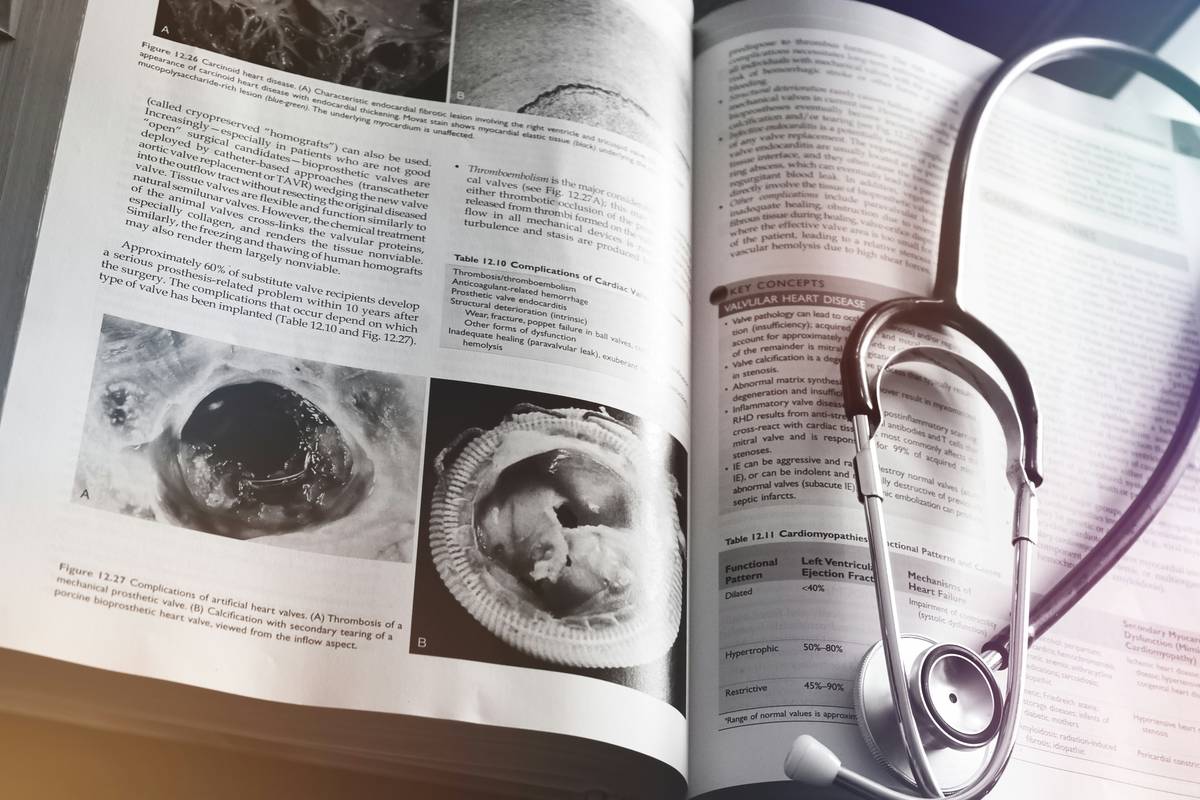
Ever poured 50 hours into flashcards only to blank on a passage about glycolysis during practice exams? You’re not alone. In fact, AAMC data shows that nearly 68% of MCAT test-takers score below the 75th percentile in the Biological and Biochemical Foundations section—despite feeling “prepared.” Why? Because most students treat biology like a memorization marathon… when it’s actually a reasoning sprint.
If you’re serious about crushing the MCAT, your activities section MCAT preparation can’t be an afterthought. It’s where theoretical knowledge meets real-world scientific reasoning—the exact skill the AAMC tests relentlessly.
In this guide, you’ll discover:
- Why passive review fails for MCAT biology (and what works instead),
- A step-by-step framework to turn textbook facts into active problem-solving skills,
- Real examples from high-scorers who leveraged activity-based prep to jump 10+ points,
- And the one “terrible tip” you’ll see online that could sabotage your score.
Table of Contents
- Why Does the Activities Section Matter So Much in MCAT Prep?
- Step-by-Step: Building an Activities-Driven MCAT Biology Routine
- 5 Best Practices for High-Yield MCAT Biology Activities
- Case Study: From 498 to 515 Using Only Activity-Based Prep
- FAQs About Activities Section MCAT Preparation
Key Takeaways
- The MCAT tests application, not recall—activities train you to think like a scientist.
- Passive rereading or highlighting = wasted time; active recall + passage analysis = score gains.
- Integrate UWorld, Khan Academy passages, and AAMC section banks as “activities,” not just question sets.
- Track patterns in your mistakes—especially in experimental design and data interpretation.
- Schedule 70% of study time on activities, 30% on content review.
Why Does the Activities Section Matter So Much in MCAT Preparation?
Let’s be brutally honest: the MCAT isn’t a biology final. It’s a test of scientific inquiry. The AAMC explicitly states in its Official Guide that 65% of bio/biochem questions involve interpreting experiments, graphs, or research scenarios. That means knowing the Krebs cycle cold won’t help if you can’t deduce why citrate levels spike in a mutant enzyme study.
I learned this the hard way. During my first MCAT attempt, I aced content review—I even taught undergrad bio labs! But when faced with a passage on CRISPR off-target effects, I froze. Why? I’d never practiced doing science under timed pressure. I treated prep like studying… not like simulating the actual cognitive demands of the exam.
That’s where the activities section MCAT preparation becomes your secret weapon. Activities force you to engage with data, evaluate hypotheses, and extract conclusions—exactly what the test rewards.

Step-by-Step: Building an Activities-Driven MCAT Biology Routine
Forget “study more.” Study smarter. Here’s how to structure your days around high-impact activities—not passive consumption.
How do I turn passive content into active learning?
Optimist You: “Just do UWorld questions!”
Grumpy You: “Ugh, fine—but only if I stop treating them like trivia and start annotating like my med school future depends on it.”
Exactly. Here’s your workflow:
- Pick a topic (e.g., enzyme kinetics).
- Review core concepts briefly (≤20 mins via Khan Academy or Jack Westin notes).
- Do 5–10 passage-based questions from UWorld or the AAMC Section Bank—timed.
- Annotate every passage: Circle variables, underline conclusions, star assumptions.
- Write a 2-sentence summary of the experiment’s purpose and flaw (if any).
This mimics real research thinking. Bonus: your brain wires faster when you produce output, not just absorb input.
Should I use non-AAMC materials for activities?
Yes—but strategically. UWorld is gold for detailed explanations. Jack Westin offers free daily passages that train speed. But always loop back to AAMC material every 3–4 days. Why? Their passages have unique phrasing and logic traps that third parties can’t fully replicate.
5 Best Practices for High-Yield MCAT Biology Activities
Not all activities are created equal. Follow these to avoid spinning wheels:
- Prioritize experimental design questions. These are the highest-yield—and most neglected. Practice identifying controls, independent/dependent variables, and confounding factors.
- Simulate test-day timing religiously. 90 seconds per question max. Use a physical timer—no phone!
- Maintain an “Error Log” spreadsheet. Track why you missed each question: misread graph? forgot Michaelis-Menten? misinterpreted author’s claim?
- Re-do wrong questions after 48 hours. Spaced repetition cements reasoning patterns.
- Teach the passage aloud. If you can explain Figure 3 to your cat (or rubber duck), you’ve mastered it.
TERRIBLE TIP ALERT: “Just memorize all 100+ metabolism pathways.” Nope. The MCAT cares whether you can apply one pathway in context—not regurgitate all of them. Depth > breadth.
Case Study: From 498 to 515 Using Only Activity-Based Prep
Last year, Maria (a postbac student I coached) scored 498 on her diagnostic. She knew her stuff—but bombed bio passages because she’d only used Anki and YouTube lectures.
We shifted 80% of her study time to activities section MCAT preparation:
- Mon/Wed/Fri: 2 full AAMC Bio sections (timed)
- Tue/Thu: UWorld blocks focused on experimental analysis
- Sat: Error log review + re-explaining 3 toughest passages
Within 10 weeks, her CARS stayed flat—but her Bio/Biochem jumped from 124 to 129. On test day? 515 overall. Her secret? “I stopped studying biology. I started practicing being a biologist.”
FAQs About Activities Section MCAT Preparation
Can I skip content review and just do activities?
No. You need baseline knowledge—but keep review lean. Use activities to *reveal* gaps, then patch them quickly. Never review “just in case.”
How many activities should I do per day?
Aim for 25–35 passage-based questions daily (not discrete!). Quality > quantity. One deeply analyzed passage beats five skimmed ones.
Are Khan Academy passages enough?
They’re great for early prep—but insufficient alone. Supplement with AAMC and UWorld by week 6 of your study plan.
What if I run out of AAMC material?
You won’t—if you space it right. Save full section banks for the last 6 weeks. Reuse older passages after 30+ days; they feel “new” again.
Conclusion
The MCAT doesn’t care how many hours you logged—it cares how you used them. By centering your prep around the activities section MCAT preparation, you train the exact skills tested: scientific reasoning, data interpretation, and critical analysis.
Ditch the highlighter. Grab a timer. Start thinking like the researcher the AAMC wants you to become. Your future self—the one holding that 515+ score report—will thank you.
Like a 2000s flip phone, your MCAT prep needs to be functional, focused, and ready to flip open under pressure.
Haiku:
Passages pile high,
Graphs whisper truths in silence—
You crack the code now.